

This guide walks through every stage of the process: legal groundwork, room-by-room sorting, disposal routes, and the decision framework that keeps things moving — including when professional help makes more sense than going it alone.
Key Takeaways
- Secure legal authority and physical documents before moving or distributing anything
- Use a three-zone sorting system to prevent every decision from feeling equally urgent
- Start with low-sentimental rooms; save bedrooms and personal offices for last
- Get appraisals before donating or discarding jewelry, art, antiques, or collectibles
- Build buffer time into your timeline — estate cleanouts reliably take longer than expected
Before the Cleanout Begins: What You Need to Prepare
Skipping the preparation phase is where most estate cleanouts go sideways. Decisions made without legal clarity, family alignment, or a realistic budget create costly problems mid-process that are hard to undo.
Legal and Safety Groundwork
In New York, the named executor cannot act on the will's directions until it has been filed and admitted to probate in Surrogate's Court. Being named in the will is not enough — Letters Testamentary must be issued by the court before you sell, donate, or distribute contents. Preliminary Letters Testamentary can be requested while probate is pending, but SCPA 1412 explicitly bars payment of legacy or distributive shares under preliminary authority.
Before any physical work begins, confirm that:
- Locks and alarm codes have been changed to secure the property
- An estate attorney has been consulted about probate timelines and restrictions
- The property has been assessed for hazards — particularly in older homes
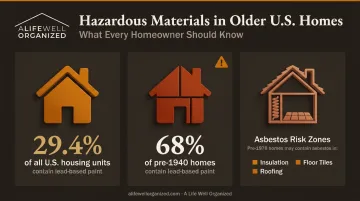
That last item carries real weight. HUD's American Healthy Homes Survey found that 29.4% of U.S. housing units contain lead-based paint, with prevalence reaching 68% in pre-1940 homes. Asbestos in insulation, floor tiles, and roofing materials is also common in older properties. If the estate was built before 1978, arrange a professional hazard assessment before any sorting or demo work disturbs painted or insulated surfaces.
Family Coordination and Emotional Readiness
Hold a family meeting before anyone touches a single item. The goal is alignment on three things: who has decision-making authority, how disputed items will be handled, and how remote relatives will be kept in the loop.
Practical tools that help:
- Colored sticker tags per family member for items under consideration
- Photo documentation sent to relatives who can't be present
- A designated staging area for disputed items, so they don't block progress
The emotional reality also deserves honest planning. Estate cleanouts surface grief, trigger memories, and create family tension — sometimes all in the same afternoon. Working in shorter sessions rather than marathon days prevents burnout. Designating someone to record the stories that surface during sorting is worth doing; those conversations often don't happen again.
Timeline and Budget
Once the relational groundwork is in place, the logistical picture comes next. Estate cleanout timelines vary widely — collection density, appraisal needs, probate restrictions, hazardous materials, and family disagreements all extend the process in ways that are impossible to predict by square footage alone. Build buffer time in from the start.
Budget items to track:
| Line Item | Benchmark Range |
|---|---|
| Full estate cleanout (project) | $275–$4,000; avg. $1,250 |
| Junk removal component | $60–$700 |
| Dumpster rental | $294–$480/week |
| Professional organizer | ~$380 typical |
| Estate sale company commission | 30–40% of gross proceeds |
| Appraisal fees | Varies; no standard national rate |

How to Declutter for an Estate Cleanout: Step by Step
Step 1: Conduct a Full Walkthrough Before Touching Anything
Before a single item is moved, walk the entire property slowly: garage, attic, basement, outbuildings, and any offsite storage units. The goal isn't to make decisions yet — it's to understand the full scope before anything gets moved.
During this walkthrough:
- Photograph and video every room in its current state
- Flag items that will need appraisal, family input, or specialist review
- Note any hazards, structural issues, or areas requiring professional access
This documentation also serves as a legal record for estate purposes — useful if questions arise later about what was present and in what condition.
Step 2: Secure Documents and Digital Assets
Before anything is donated, discarded, or moved, identify and secure all documents and digital accounts. Physical documents to gather first:
- Wills, trusts, and any codicils
- Tax returns (IRS guidelines generally require 7 years of records for certain claims)
- Property deeds, vehicle titles, and mortgage documents
- Insurance policies and beneficiary designations
- Bank and investment account statements
- Government-issued IDs and military records
Digital assets are easy to overlook. Under New York's EPTL Article 13-A, fiduciaries have specific — and limited — authority over electronic communications and digital accounts. Inventory these before closing or deleting anything:
- Email accounts and cloud storage
- Online banking and investment portals
- Cryptocurrency wallets
- Social media profiles
- Password managers (and check desk drawers for printed password lists)
Step 3: Set Up a Three-Zone Sorting System
With documents secured, the physical sort can begin. The most common mistake at this stage is treating every decision as equally urgent — a dedicated staging system keeps the process moving.
- Zone 1 — Keep: Items with clear family recipients or confirmed legal designation
- Zone 2 — Evaluate: Items requiring appraisal, family discussion, or specialist review; these should not be donated or discarded until assessed
- Zone 3 — Remove: Items ready for immediate donation, recycling, or disposal
Having dedicated physical spaces for each zone means the process can continue even when individual decisions stall. Zone 2 items don't block everything else.

Step 4: Declutter Room by Room
Start with low-sentimental spaces: bathrooms, laundry rooms, linen closets, and utility areas. Building decision-making momentum here makes the harder rooms — bedrooms, personal offices, hobby spaces — more manageable when you reach them.
For large or emotionally complex estates, professional support during this phase makes a measurable difference. ALWO's team creates detailed inventories, coordinates with appraisers, and manages sorting logistics, calling on family members only when key decisions genuinely require their input. That structure reduces decision fatigue and the risk of costly mistakes.
Step 5: Handle Disposal — Donate, Sell, Recycle, or Discard
Once sorting is complete, each category needs a specific route:
- Usable goods: Donation partners, consignment, or local charities. Organizations like Pickup Please offer free pickup with a tax receipt for clothing and smaller items; Habitat NYC & Westchester ReStore accepts approved furniture and appliances.
- Higher-value items: Estate sales (companies typically charge 30–40% commission), or platforms like Chairish (30–40% commission), Etsy (6.5% transaction fee, items must be 20+ years old), or Ruby Lane for vetted antiques.
- Recyclables: Local programs for paper, metal, and glass.
- Medications: DEA-authorized take-back locations — more than 16,500 nationwide. NYSDEC notes most municipal HHW events do not accept pharmaceuticals.
- Electronics: New York prohibits discarding covered electronics — including TVs and monitors — in standard trash. Violations carry civil penalties up to $100 per violation.
- Hazardous materials: NYC Special Waste Drop-Off events for paints and chemicals; PaintCare drop-off locations for architectural paint.
The Estate Declutter Framework: What to Keep, Sell, Donate, and Discard
Starting with a clear decision framework prevents the paralysis that hits mid-process.
Always Keep
Legal documents, financial records, original government IDs, military records, and irreplaceable sentimental items with clear family significance. These get secured first, before any sorting begins.
Evaluate Before Deciding
Do not donate or discard these categories without professional appraisal:
- Jewelry (including pieces that appear to be costume)
- Fine art and framed paintings
- Antique furniture and rugs
- Silverware, coins, and stamps
- Vintage collectibles and rare books
- Musical instruments
The stakes are real: in 2024, a Rembrandt portrait found in a Maine attic (initially estimated at $10,000–$15,000) sold at auction for $1.41 million.
For donated property deductions over $5,000, the IRS generally requires a qualified appraisal from an ASA, AAA, or ISA-credentialed appraiser. That fee is almost always recovered in value protected.
Donate or Sell
Items in good condition with no structural damage or pest evidence:
- Clothing and linens
- Furniture (inspect carefully for bedbugs before any donation or disposal)
- Small appliances and kitchenware
- Books and décor
Estate sales and online resale platforms like Chairish or Facebook Marketplace can recover hundreds to thousands in cleanout costs — worth building into the timeline early.
Discard Without Deliberation
Clear these first — they create immediate momentum:
- Expired food and medications
- Broken appliances and outdated electronics (VHS tapes, floppy disks)
- Worn clothing
- Old magazines, junk mail, and duplicate household items
Handle with Care
These cannot go into standard trash or recycling, and ignoring this creates legal and environmental problems:
- Prescription and OTC medications → DEA take-back sites
- Paints and chemicals → NYC Special Waste Drop-Off or SAFE events (rules vary by municipality — confirm locally)
- CRT televisions and computer monitors → manufacturer or municipal e-waste programs
- Mattresses → NYC requires plastic enclosure before curbside collection; infested bed frames must be labeled (check your local municipality for equivalent requirements)
Common Mistakes That Derail Estate Cleanouts
Most estate cleanouts don't fail because of the volume of items — they stall because of avoidable missteps. These three are the most common:
- Rushing the sorting process. Lease deadlines, sale timelines, and family conflict push people toward decisions they're not ready to make. Items that need evaluation don't get it. Irreversible choices made under pressure are the most common source of regret.
- Discarding before appraising. Estate cleanouts regularly surface items of significant value that look ordinary — costume jewelry that turns out to be gold, furniture with provenance, books that are first editions. An appraiser's fee is almost always recovered through what it uncovers.
- Underestimating the emotional scope. Most families underestimate both the time required and the toll it takes. Grief surfaces, memories are triggered, and family tension is common. Failing to plan for emotional capacity leads to burnout and projects that stall halfway through.

When to Hire a Professional Organizer for an Estate Cleanout
Some signals that professional help is the right call:
- The estate is large, collections are extensive, or the property has multiple structures
- Family members are out of town and can't be present for sorting
- There are disputes among heirs that are slowing or blocking progress
- Probate timelines are tight and the property needs to be cleared quickly
- The emotional and physical demands have exceeded what the family can manage
A professional organizer handles sorting, decision-making, and system-building, bringing both strategy and empathy to the process. A junk removal company executes physical hauling after those decisions are made. For complex or high-value estates, the professional organizer comes first.
For families in New York City and the Tri-state area, A Life Well Organized offers confidential, white-glove estate organizing services for both grieving families and professional intermediaries — including executors and estate managers.
Their four-phase Discover, Declutter, Organize, Balance method covers everything from the initial walkthrough through inventory management, appraiser coordination, and long-term asset system setup. NAPO-certified and experienced across Manhattan, the Hamptons, Westchester, and beyond, ALWO offers a complimentary evaluation to get started.
Frequently Asked Questions
What is the hardest thing to get rid of when decluttering an estate?
Sentimental items — photographs, handwritten letters, everyday objects tied to a specific person or memory — are consistently the hardest. See the question below on sentimental items for practical strategies that preserve the connection without keeping everything.
How much do estate cleanout services cost?
According to Angi's 2026 data, estate cleanouts run $275–$4,000 per project, averaging around $1,250. Costs vary significantly depending on whether you hire junk removal only, a professional organizer, or a full-service estate management firm. Get project-specific quotes — no reliable per-square-foot formula exists.
How long does an estate cleanout typically take?
There is no reliable formula tied to home size. Collection density, probate restrictions, appraisal needs, hazardous materials, and family decision-making all affect the timeline. Build buffer time into any plan you set, and treat your initial estimate as a floor, not a ceiling.
Should I hire a professional organizer or a junk removal company?
A professional organizer helps you sort, evaluate, and make decisions about what to keep, donate, and let go of. A junk removal company executes removal after those decisions are made. For complex estates, both may be needed — but in sequence, not simultaneously.
What should I do with sentimental items I can't keep?
Several approaches help:
- Gift items to family members who will actually use them
- Create a memory box of small, meaningful pieces
- Photograph objects to preserve the memory without keeping the physical item
- Donate to a cause the deceased cared about
How do I handle family disagreements over belongings?
Establish a fair process before sorting begins — rotating selection, buyout offers, or third-party mediation. Photograph contested items so remote relatives can weigh in without delaying the project. Move disputed items to a separate staging area so the broader cleanout can continue.