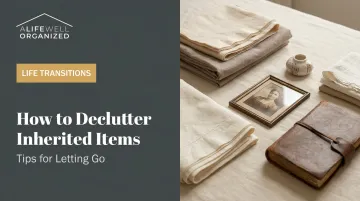
The good news: you don't have to keep everything to honor someone fully. Memories live in you, not in a china cabinet. This guide offers a compassionate, practical path through the process — one that respects both your grief and your need to live intentionally in the space you have.
Key Takeaways
- Releasing an item doesn't mean releasing the person — your memories aren't stored in objects
- Identify your true "treasures" first, then release everything else without guilt
- Set clear decision criteria before you sort to reduce emotional fatigue
- What you don't keep can find a good home through family, donation, or resale
- It's okay to pause, work in stages, or ask for professional support
Why Letting Go of Inherited Items Feels So Hard
Inherited belongings aren't just objects. They're stand-ins for people we love — physical proof that someone existed, that they mattered, that our relationship with them was real. Discarding a parent's sweater can feel like erasing them.
A 2024 systematic review of 79 bereavement studies found that continuing bonds with the deceased — including through physical objects — can provide genuine comfort, but can also intensify the sense of absence. Neither keeping nor discarding is inherently healthier. What matters is whether the items you keep are chosen with intention.
The Guilt Loop
Many people fall into a pattern of keeping things out of obligation rather than genuine connection. A 2023 qualitative study of 25 UK inheritors found consistent themes of guilt, anxiety, and decision paralysis around unwanted possessions. Common patterns from that research included:
- Keeping unused items to honor an imagined "contract" with the deceased
- Feeling obligated to display or use objects that don't fit your life
- Avoiding decisions altogether because every choice feels final
- Guilt over not grieving "correctly" through the objects left behind

These responses aren't personal failings — they're predictable reactions to an emotionally loaded situation. The guilt, though, rarely stays contained to the objects themselves.
When the Volume Becomes Unmanageable
Inheriting an entire home compounds everything. You're making hundreds of decisions while simultaneously grieving — a combination that can bring anyone to a standstill. Structure helps. So does outside support — not as a last resort, but as a practical tool for an objectively difficult task.
Getting in the Right Headspace Before You Start
Timing matters more than most people expect. Attempting to sort through inherited belongings too soon after a loss often leads to regret — either keeping too much out of raw grief or discarding things impulsively that you'll wish you had later.
There are no universal rules or timetables for handling a loved one's possessions. Some people are ready within weeks; others need years. What matters is readiness, not a prescribed deadline.
The Core Mindset Shift
Before you touch a single box, reframe the question you're asking yourself. Instead of:
"What am I allowed to get rid of?"
Ask:
"What do I genuinely want in my life and home?"
The first question puts you in a position of defending decisions. The second puts you in the role of author — someone actively building a life rather than managing an obligation.
Start With Everyday Clutter First
That mindset shift also shapes where you begin. If the home you're sorting contains general clutter alongside inherited items, clear that first. Sorting through old mail, expired pantry items, and broken household goods builds your decision-making stamina without the emotional cost of sentimental items. By the time you reach the meaningful pieces, you'll have more energy and focus to give them.
How to Decide What to Actually Keep
The Treasure Hunt Approach
Rather than assigning equal weight to every item, approach the process as a search for what genuinely matters. Some pieces will stop you in your tracks — you'll reach for them and feel something immediate and specific. Those are your treasures. Everything else is a candidate for release.
A Practical Decision Framework
For each item, ask:
- Does this have a clear, specific place in my home?
- Have I thought about this item in the past year?
- Does keeping it bring comfort, or does it bring guilt?
- Would I choose this today if I encountered it elsewhere?
- Does someone else in the family have a stronger connection to this?
If an item fails most of these questions, it's likely being kept out of obligation — not genuine connection. Items that don't pass this check are good candidates to donate, pass on, or let go entirely.
Genuine Value vs. "I Should" Thinking
Ask yourself whether an item holds real value — emotionally resonant, financially significant, or historically meaningful — or whether you're keeping it simply because letting it go feels wrong. That second category tends to end up in a closet for decades, taking up space without serving any real purpose in your life.
Worth keeping: Items with clear emotional resonance, genuine financial value, or a specific place in how you actually live.
Handling Duplicate and Excess Items
Full china sets, multiple furniture pieces, extensive collections — these create a specific pressure to maintain completeness that doesn't serve you. Consider keeping one or two pieces from a set that genuinely fit your life, then releasing the rest. A single teacup used daily honors the collection more than 24 place settings stored in boxes.
Document Before You Decide
For items with genuine monetary or historical value — jewelry, art, antiques, heirlooms — photograph and briefly describe each piece before making any decisions. This serves two purposes: it aids family coordination (preventing assumptions about who wants what) and it preserves the story even if the item is eventually passed on. A Life Well Organized's estate management process includes formal inventory and heirloom documentation as part of their estate clearance work, along with coordination with trusted appraisers for items requiring professional valuation.
Responsible Ways to Let Go of What Doesn't Fit
Releasing an item doesn't have to mean abandoning it. Thoughtful rehoming transforms "getting rid of" into "passing forward," and that shift in framing makes the whole process easier.
Work Through a Clear Sequence
- Offer to family first — share a photo in a group chat before assuming no one wants it. You may be surprised
- Donate to aligned organizations — matching a loved one's belongings to causes they cared about adds meaning to the release
- Sell through estate sales or online platforms — EstateSales.NET's 2024 industry survey found that 75% of estate sale operators donate unsold items, so even this route often ends in responsible rehoming
- Dispose of what's genuinely damaged — items beyond use or gifting can be released without guilt

NYC and Tri-State Donation Options
For clients in New York City and the surrounding area, several organizations accept inherited household goods:
| Organization | Accepts | Notes |
|---|---|---|
| Habitat NYC & Westchester ReStore | Furniture, appliances, household items | Pickup available; proceeds support affordable housing |
| Housing Works | Furniture, apparel, antiques, art, lighting | Photo approval required for furniture pickup |
| Goodwill NYNJ | Clothing, shoes, jewelry, household goods | Standard store drop-off |
| Materials for the Arts | Art supplies, fabric, musical instruments, jewelry | NYC cultural and educational reuse |
In 2021, donateNYC partners diverted 67,617 tons of goods — including nearly 4,000 tons of housewares and collectibles and over 2,000 tons of furniture — from landfill. Responsible rehoming at this scale is genuinely impactful.
A Life Well Organized maintains relationships with donation centers and creative reuse organizations throughout NYC and the Tri-state area. Jenny, who leads sustainability efforts at the company, has made these partnerships a core priority — so clients don't have to research destinations or manage logistics on their own.
When Selling Makes Sense (and When It Doesn't)
Selling is worth pursuing when an item has clear market value and a straightforward path to sale. It becomes more burden than benefit when an item requires significant effort to appraise, photograph, list, and ship, and the emotional cost outweighs any financial return. Factor in both the logistical and emotional cost before deciding selling is the right route.
Creative Ways to Honor Loved Ones Without Keeping Everything
Keeping fewer objects doesn't mean preserving fewer memories. The goal is to concentrate meaning into a smaller, more intentional collection of objects.
Display and Use Over Storage
A loved one's favorite serving bowl used at Sunday dinners honors them more than 12 pieces of matching china stored in a box. Consider:
- A shadow box with a few key mementos from a specific chapter of their life
- One framed photograph alongside a single treasured object
- A quilt, clock, or piece of art integrated into your daily living space
Visible, used items carry a person's presence far more than storage does.
Create a Digital Memory Archive
Photographs, letters, and the stories behind significant items can be preserved without keeping the physical object. Options include:
- Scanning correspondence and organizing it with clear labels (the Library of Congress offers guidance on personal digital archiving)
- Photographing items before releasing them, with a written note about their origin
- Recording family members' memories using platforms like StoryCorps, which maintains a public archive of recorded remembrances
Repurpose With Intention
For items with strong sentimental value but no practical function:
- Fabric from clothing can be made into a memory quilt
- Old photographs can be compiled into a printed photo book
- Medals, pins, or jewelry can be reframed or reset into wearable pieces
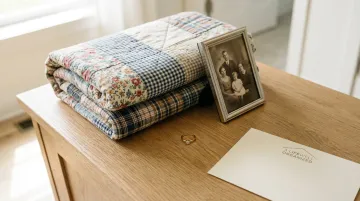
These options preserve the emotional connection in a form that actually fits your life.
When the Volume Feels Unmanageable
For those managing a full estate — particularly in high-density environments like New York City where space is genuinely limited — the volume of decisions can become overwhelming. This is where working with a professional organizer who specializes in estate transitions provides real value: not just logistical structure, but emotional steadiness throughout the process.
A Life Well Organized's estate management services are designed for precisely this kind of transition. Their four-phase method (Discover, Declutter, Organize, Balance) is adapted for estate clearances, with coordinated appraiser access, detailed inventory management, and support that treats the emotional weight of the process with the same care as the financial one.
Frequently Asked Questions
What does a professional organizer recommend for inherited clutter?
Most professional organizers recommend identifying the items with genuine personal meaning first, then releasing the rest using clear criteria. Work in structured sessions, and keep a "not now" category for anything you're not ready to decide on yet.
What is the hardest thing to get rid of when decluttering?
Sentimental items, particularly inherited belongings, are consistently among the most difficult to release — they feel tied to people and relationships, not just their practical function. That's why inherited decluttering typically takes longer than standard sorting, and that's completely normal.
How do you declutter inherited items without feeling guilty?
The key shift is separating love for the person from obligation to every object they owned. Keeping a few genuinely meaningful pieces and thoughtfully rehoming the rest is an act of intention, not disrespect. Guilt tends to ease when you know items are going somewhere useful rather than going to waste.
What is the 3-3-3 rule for decluttering?
There's no single authoritative definition — versions vary from keeping three items per category to reviewing items across three time frames. Treat it as a loose creative prompt rather than a formal system, especially for estate or grief-related sorting.
What is the 50% rule in decluttering?
The 50% rule is an informal heuristic: pick one area, review its contents, and aim to remove roughly half. It works well with inherited items because it sets a concrete reduction target without requiring item-by-item justification. Think of it as a practical capacity goal, not a grief framework.